
The Story Circle in Action: How Passenger Crafted Chey Bowers' Film
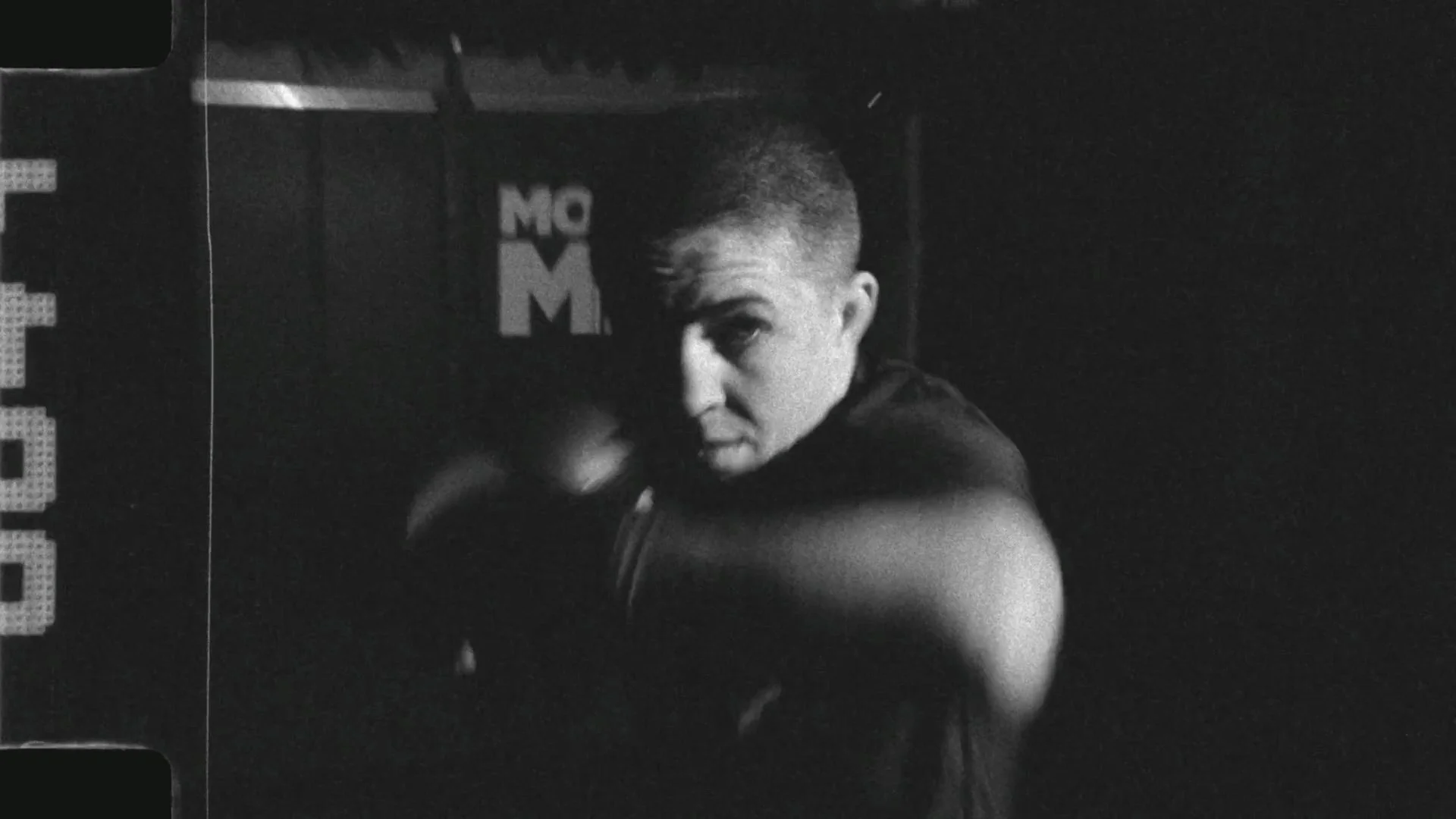
A Breakdown of the 8-Step Framework Applied to a Real Founder Story
Introduction
Chey Bowers' film is a good example of the Story Circle framework work in action. Every element—from the opening image of a small-town Minnesota girl to the closing shot of a fighter in her prime—hits all eight steps with precision.
What makes this film work is that we understood the architecture of Chey’s story. We knew which moments mattered, where the tension lived, and why her journey was worth telling.
Here's how we applied the Story Circle to craft her narrative.
Step 1: You — The Baseline Character
What this step does: Establishes who your character is before transformation. Their comfort zone. Their baseline.
How it appears in Chey's film: The film opens with Chey describing her childhood in St. James, Minnesota, a town of 4,000 people. She states that she was "a weird kid." and often alone. Additionally, she is the youngest of four children by about a decade.
Here's the important part: she didn't just say she was "weird." She described what being different actually cost her. She built a wild imagination as a survival mechanism. She learned to hide who she really was. Thus, she performed for people, showing them what they wanted to see.
This is the baseline: a brilliant, creative kid who learned early that being herself was dangerous. That hiding was safer than being seen.
Why this matters: Without this step, we don't understand the weight of what comes later. We need to know who Chey was before so we can fully appreciate the extent of her journey and transformation.
Step 2: Want — The Emotional (and Tangible) Desire
What this step does: Reveal not just what the character wants, but why they want it. The emotional layer underneath.
How it appears in Chey's film: Chey's tangible want is clear: to be strong. To survive and prove something to herself.
But the emotional want runs deeper, and that's where the film's effectiveness lives.
She wants to stop hiding. She wants to release "the darkness that everyone feels they have to hide about themselves." She wants to be seen.
The eating disorder was about control. About shrinking herself because she believed she had to disappear to be acceptable.
The emotional want: to take up space and to stop performing. In short, to be authentic.
Why this matters: This is why the story resonates. It's not about MMA or fighting. It's about a person reclaiming their right to exist as themselves.
Step 3: Go — The Door of No Return
What this step does: The clear, irreversible action that launches the character into a new world.
How it appears in Chey's film: There are two doors of no return in Chey's story.
The first door is hospitalization for the eating disorder. "And so I was finally hospitalized in an inpatient care... I am not going to lose to myself. It's either this or I die." This is a forced "Go." Chey had to be hospitalized because of how dire her health was. But in that moment of crisis, she made a choice: "I didn't want to die."
The second door is showing up to jiu-jitsu for the first time. "I was like, 'Just go to jiu-jitsu. Just do it. Like I know you're scared. Just go.' So I showed up and I just kept showing up." This is a chosen "Go." But notice: it's also a point of no return. The moment Chey steps on that mat, she's committed to a new identity from someone who hides to someone who fights, literally and figuratively.
Why both doors matter: The first door is survival. The second door is choice. Together, they show that transformation isn't just about making it through—it's about actively choosing a new path.

Step 4: Search — Navigating the New World
What this step does: Shows how the character navigates the unfamiliar territory they've entered. The tactics, failures, and lessons.
How it appears in Chey's film: Chey's search phase is compressed but clear.
"It took about 2 months of jiu-jitsu training before I did my first tournament... with the pandemic shutting everything down, it took a little bit longer to get to my first MMA fight."
But the real search isn't the timeline. It's the internal navigation. "I was almost at the point of puking when we were walking out... I remember when the ref finally stopped the fight and I had won. And I think that was my first realization: I am strong."
She tries something terrifying. She survives it. She learns something about herself. She tries something harder. The Search phase is Chey testing her limits—discovering what she's capable of, and learning that strength isn't theoretical. It's something she can feel and own for herself.
Step 5: Find — The Realization
What this step does: The character achieves what they wanted, only to discover the real want was something else. The moment of truth.
How it appears in Chey's film: Chey wanted to be strong. And she got there. She won fights. She became a champion.
But then she says something that changes the whole story:
"It's the release of the darkness that everyone feels they have to hide about themselves. And being able to put that out as an art form, for me, is what helps kind of keep the balance so that when I am on my day-to-day, it's not leaking out and causing issues in my regular life."
That's Chey’s “Find” moment. Fighting isn't just about being strong. It's about expression. It's about taking the darkness she spent years trying to hide and transforming it into something visible, powerful, controlled.
The real want wasn't winning fights. Her desire was being allowed to be whole, darkness and light together.
Why this matters: Without this realization, Chey's story is just "girl overcomes eating disorder and becomes a fighter." With it, it becomes something different: "girl learns that the parts of herself she was taught to hide are actually her greatest strength."
Step 6: Take — The Price Paid
What this step does: Show what the character had to sacrifice to achieve what they wanted.
How it appears in Chey's film: This is the step that runs underneath everything in Chey's story. The cost isn't always stated directly, but it's visually embedded throughout.
The physical cost: the eating disorder, hospitalization, the fear walking into the cage all cost her something. Additionally, the emotional cost: years of hiding, the pain of watching family chaos from the outside, learning to perform instead of just being all took a toll. Finally, the ongoing cost: the discipline required to channel darkness into art rather than destruction and the vulnerability of actually being seen all demand a price.
Deliberately, the film doesn't skirt around any of this. Chey describes the eating disorder in detail. She talks about her fear and acknowledges that fighting is "the release of darkness." It's not sanitized.
Why this matters: If Chey had achieved her transformation without cost, the story would feel false. The Take step is what proves the transformation is real.
Step 7: Return — The Confrontation and Transformation
What this step does: The character returns to their normal world but must confront the obstacle, antagonist, or consequences of their journey.
How it appears in Chey's film: Chey's return is about learning to hold two identities at the same time: the weird kid who hid, and the fighter who is seen.
She has to exist in both worlds, as a champion fighter who is visible and celebrated, and as someone still healing, still managing and still learning. The confrontation here is internal. She's not fighting an external enemy. She's integrating the shadow parts of herself with the rest of her life.
This is shown most clearly in her advice to her younger self: "The only way out is through. Just keep pushing cuz there is light on the other side and you're going to be so much stronger than you are now and you're going to help so many people realize how much stronger they are."
She's not saying "I conquered my demons." She's saying "I learned to live with them and move through them. And that made me who I am."
Step 8: Change — The Transformed Character
What this step does: Show who the character is now. Changed. No longer the person they were at the start.
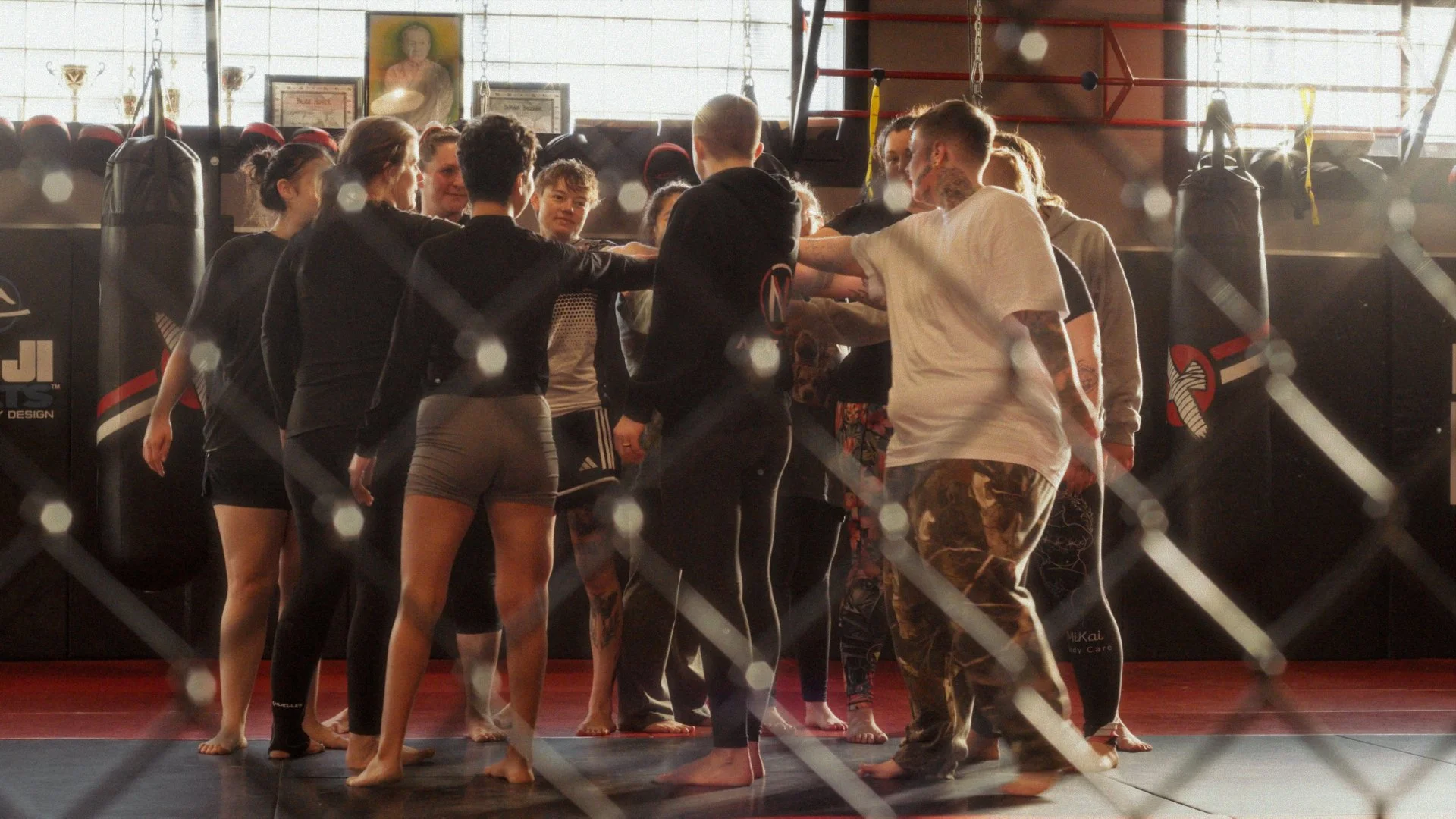
How it appears in Chey's film: The film closes with an announcer's voice: "Representing Next Edge Academy, fighting out of Sioux Falls, South Dakota by way of St. James, Minnesota. She is the former LFA Interim flyweight world champion, Chey the Boss Bowers."
But the change isn't just external. Before, she was a person who hid, who performed, who tried to shrink herself. After, She is a person who takes up space, who is seen, who channels her darkness into power.
She's still strong. But now she knows that strength comes from wholeness,accepting all of herself, not just the parts she was told are acceptable. She's still the creative kid, but now expresses it through fighting, through her body, through visible action rather than hidden imagination.
The kid from St. James who learned to hide has become the fighter who is known.
How the Story Circle Created Impact
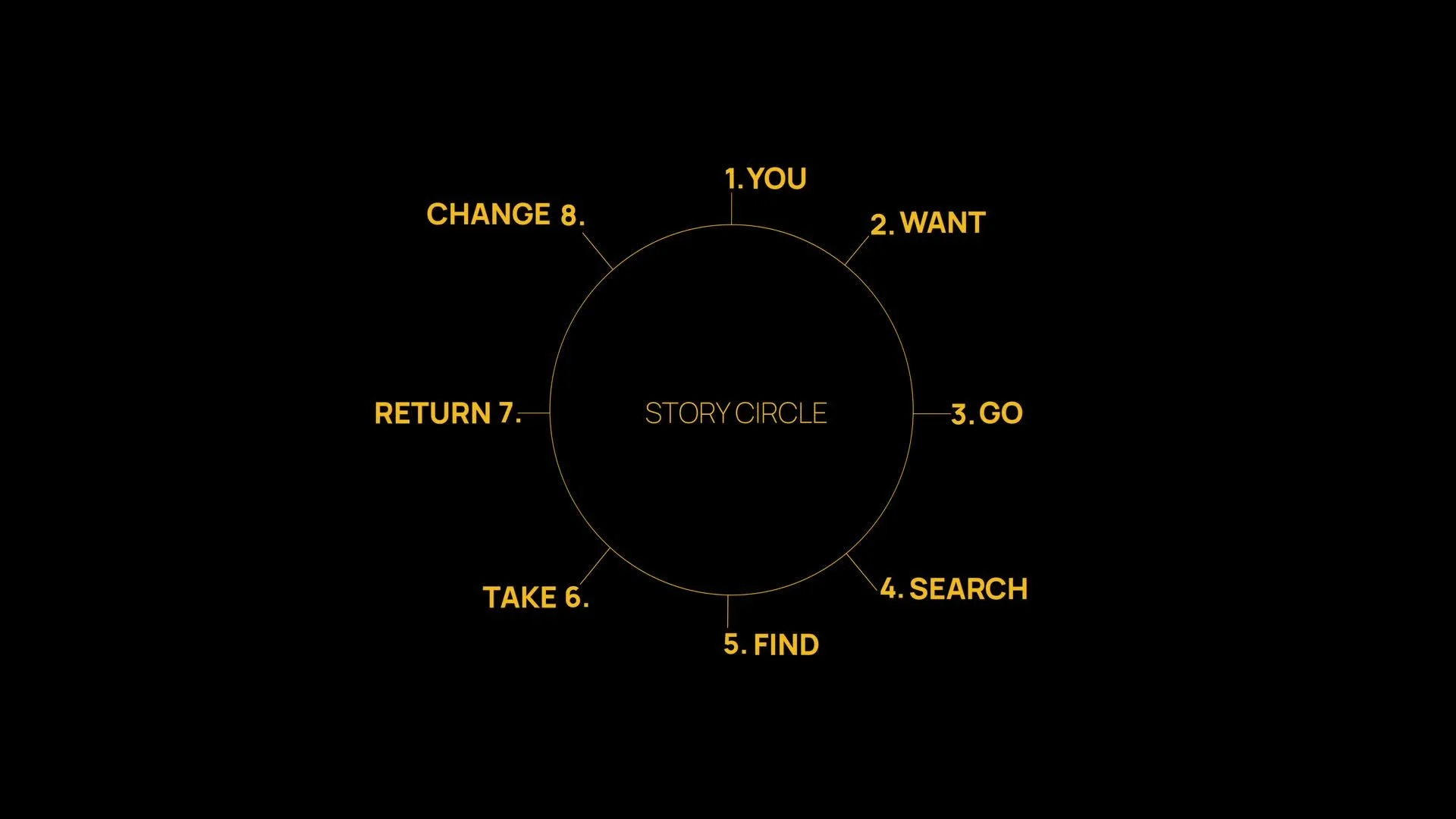
By applying the Story Circle, every element of Chey's film served the larger arc:
You — established the stakes (who she had to hide)
Want — revealed the emotional truth (she wanted to be seen)
Go — showed the irreversible choice (hospitalization + jiu-jitsu)
Search — demonstrated her learning (testing her strength)
Find — delivered the realization (strength = wholeness)
Take — proved the cost (everything she sacrificed)
Return — showed integration (existing in both worlds)
Change — revealed transformation (who she became)
Each step of the story circle is built on the last. Each moment or step earns the next step. There are no wasted moments of meandering or repetitive, "and then this happened." Every detail serves the larger story.
Why This Matters for Founders
Chey's film isn't just a profile of an MMA fighter. It's a founder's story.
She founded a new identity. She built something from the ground up. A stronger, more authentic self. She navigated obstacles, paid a price, and came out different.
By applying the Story Circle, we helped Chey see her own story the way a founder sees theirs: not as a series of random events, but as a cohesive narrative arc with intention, meaning, and direction.
The Story Circle in Practice
Here's what Chey's film taught us that applies to every founder story:
Start with the baseline. People need to know who you were before so they understand the magnitude of change. Name the emotional want—not just "I wanted to build a company," but "I wanted to prove something. I wanted to belong. I wanted to matter." Show the door of no return. What decision, circumstance, or moment was irreversible? That's where the story actually starts to gain momentum.
Use cause and effect, not just a litany of events. Don't list what happened—show why each moment led to the next. Find the realization: what did you discover that changed everything? What did you think you wanted that turned out to be something else? Don't skip the price. What did it cost you? That cost is what makes the transformation believable.
Finally, show the integration. How do you exist now in both worlds—the old and the new? Close with who you've become, not just what you've achieved.
Conclusion
Chey Bowers' film works because it follows the architecture of the story circle. This means it doesn't feel constructed…it feels true.
It feels true because every element serves the whole.
That's what the Story Circle does. It takes a life, complex, messy, contradictory and reveals the narrative underneath. That’s the power of a well designed story.
At Passenger, we don't film what you did. We film the meaningful why underneath it. The journey that shaped you. The transformation that made you who you are.
Frameworks like the Story Circle make sure that every frame, every word, every moment serves that larger truth.
That's how stories last.